Swallow Identification Quick Guide
Swallows are extremely agile fliers, and it can be overwhelming trying to quickly pick through a flock to identify all of the birds. Fortunately, it's not a terribly large family group, with only six expected species in most of the east. Once you learn what to look for, and with a little sharpening of your binocular skills to find and track a specific bird, you should be able to ID each one quickly and accurately. Note that juvenile birds can look a bit different, and the full range is not covered here. That's not really a problem in the spring.
Tree Swallow
This common species is the default for comparison, so learn it very well.
- Clean white underside, with sharp contrast between the cheek and throat area
- The upperside is a solid metallic blue, but some are fairly brown
- Juveniles are especially brown, and have a weak chest band (Bank Swallow always has a strongly-defined chest band)
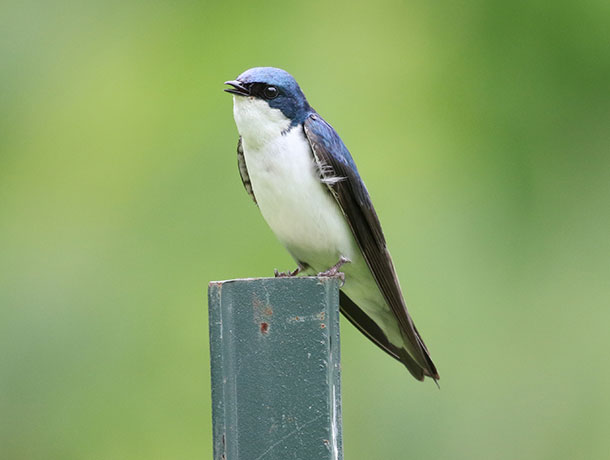
Clean white underside
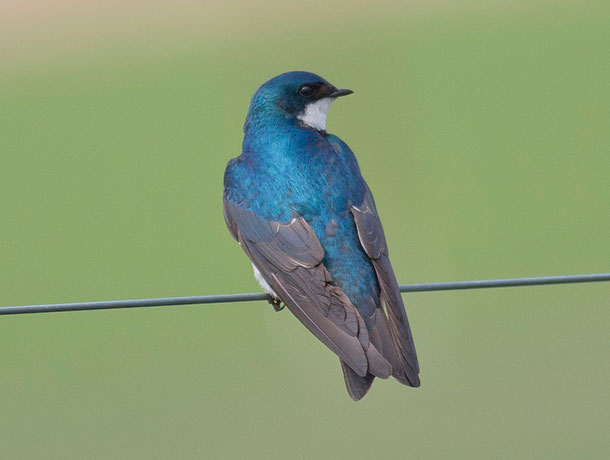
Metallic blue upperside
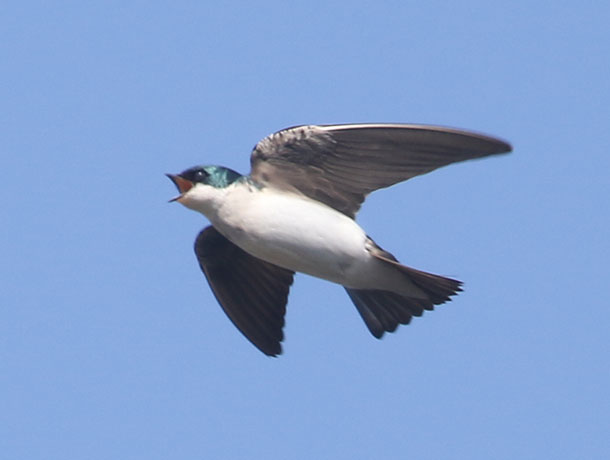
Clean white underside constrasting with dark cheek
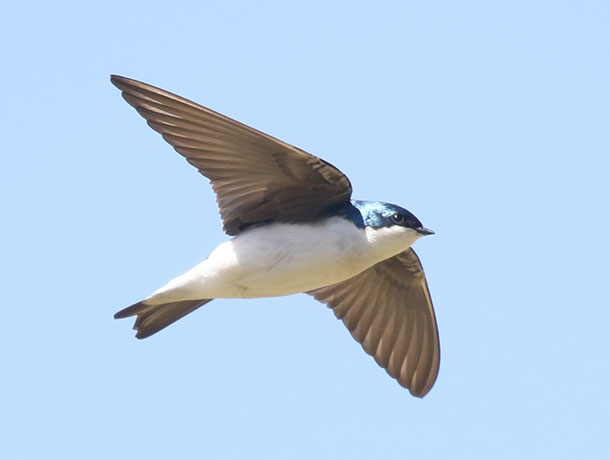
Clean white underside constrasting with dark cheek
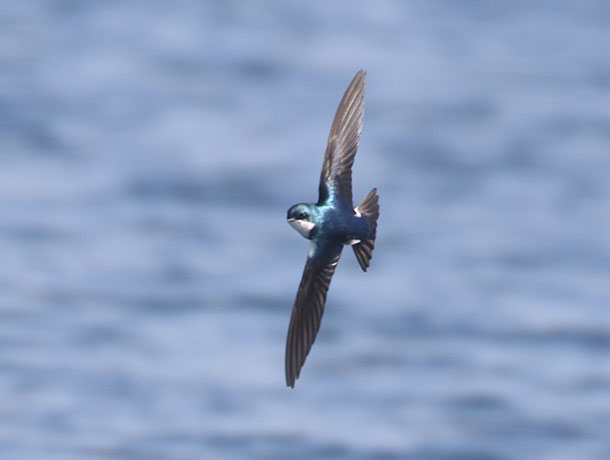
Metallic blue upperside, with dark cheek contrasting with white throat
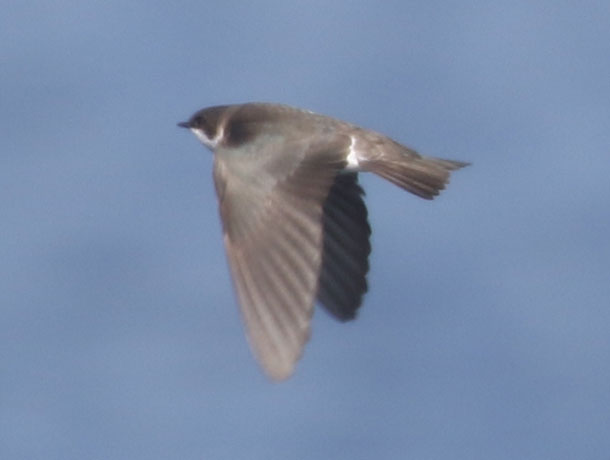
Some have a fairly brown upperside (especially juveniles)
Northern Rough-winged Swallow
A generally brown swallow with not much contrast in its plumage.
- Brownish throat that does not contrast with the cheeks
- Diffuse brownish wash on underside, particularly in the chest area, lacking any crisp markings
- Brown upperside
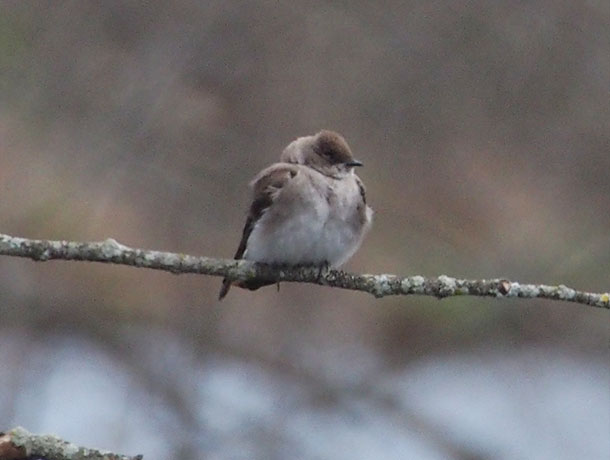
Brown wash on underside
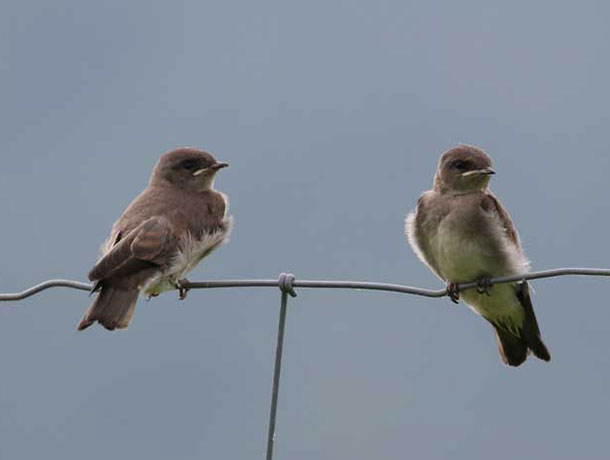
Young birds look very similar to adults
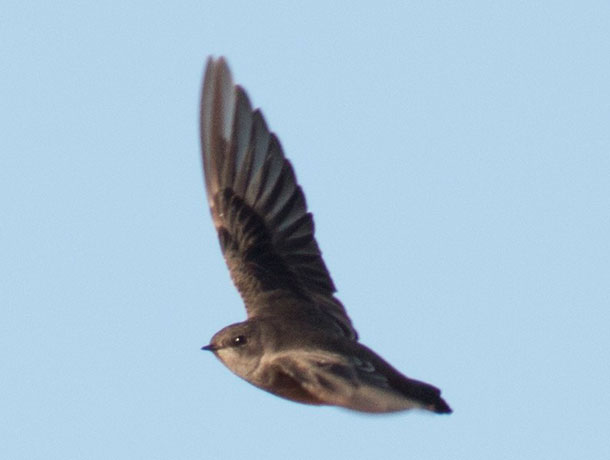
Brown upperside and brownish throat
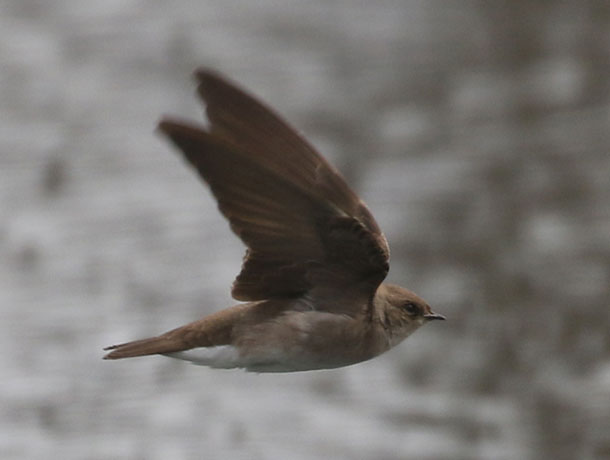
Brown wash on underside
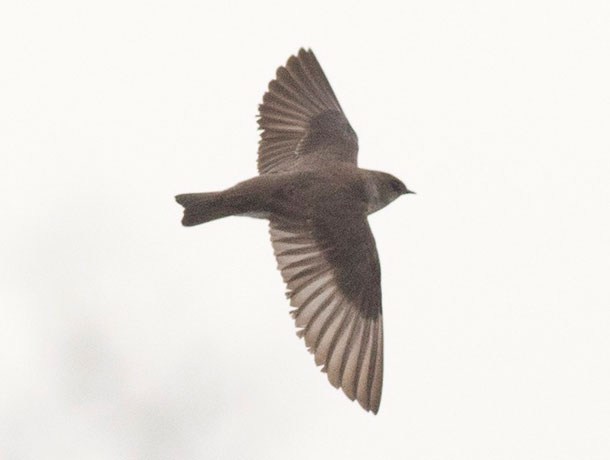
Brown upperside
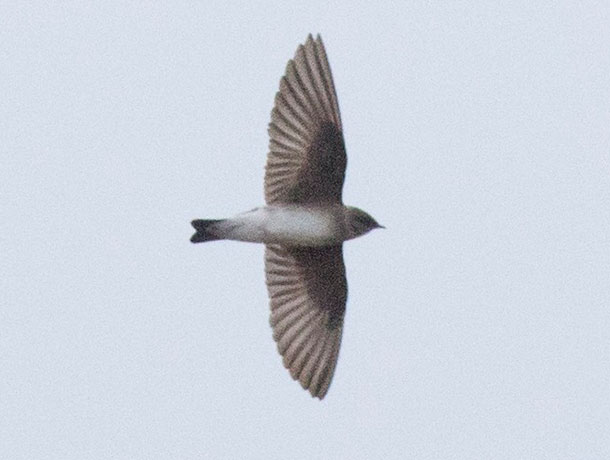
Brown wash on underside
Bank Swallow
Another "brown" swallow, but pretty dainty (both in size and flight style) compared to our other swallows, and more contrast than Northern Rough-winged Swallow.
- Like in Tree Swallow, the underside is mostly white, but with a very crisp brown chest band
- Brown upperside
- Compared to Northern Rough-winged Swallow, notice the crisp chest band and dainty build
- Juvenile Tree Swallows can have an indistinct chest band, but never as clean and crisp as Bank Swallow
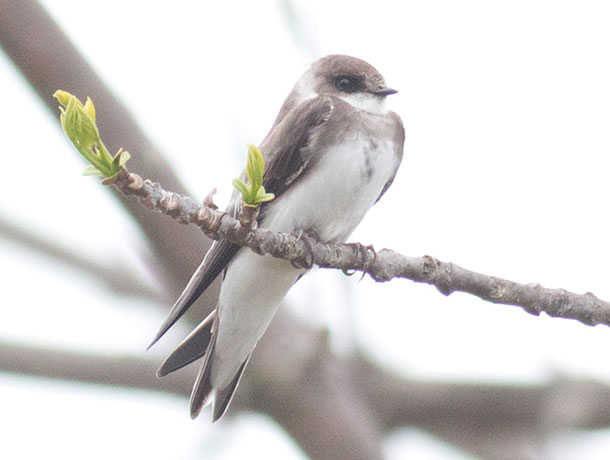
White underside with dark chest band

Even at a distance, the chest band appears very clean and crisp
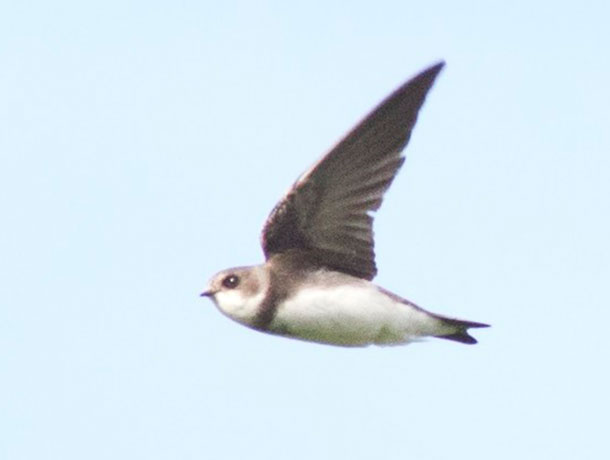
Dainty build, white underside with dark chest band
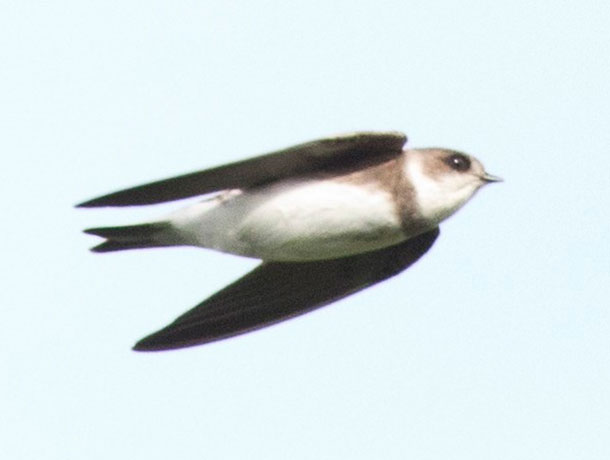
White underside with dark chest band
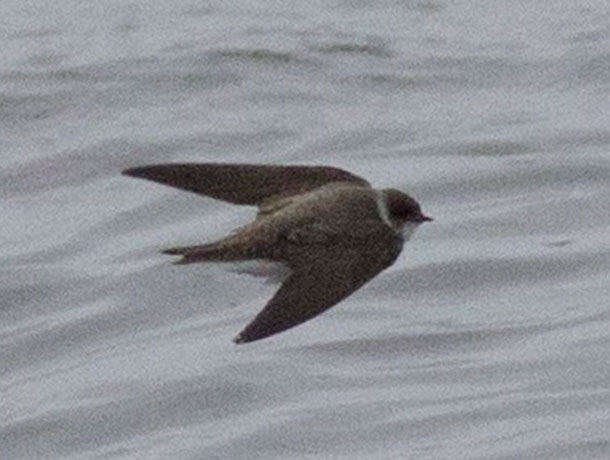
Brown upperside
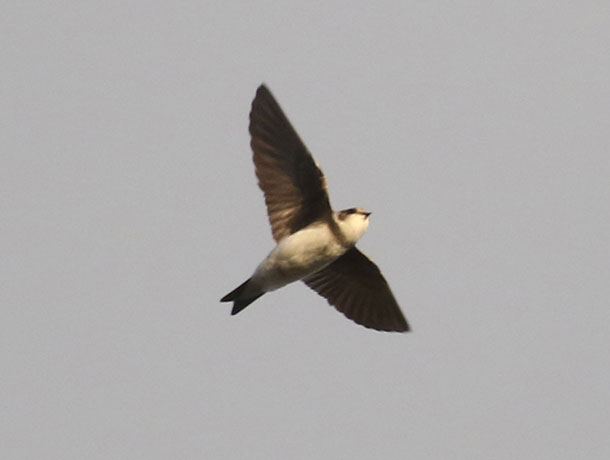
White underside with dark chest band
Barn Swallow
Pretty common, at times quite numerous. Extremely distinctive shape. The silhouette alone is enough to identify this species.
- Underside of body can be orange or white
- Dark orange throat
- Dark blue upperside
- Long, deeply forked tail (juveniles have a shorter tail)
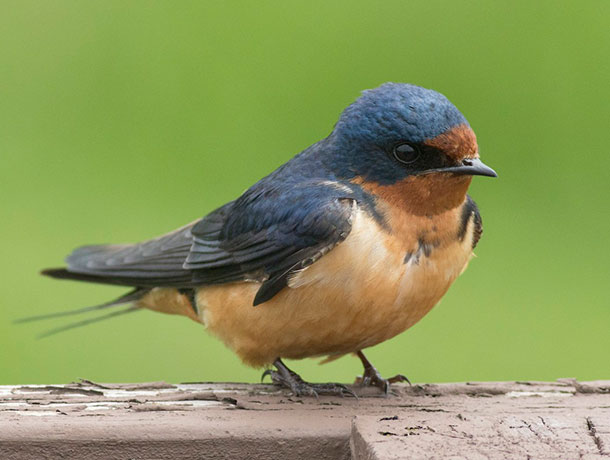
Blue upperside, orange underside, dark orange throat and forehead
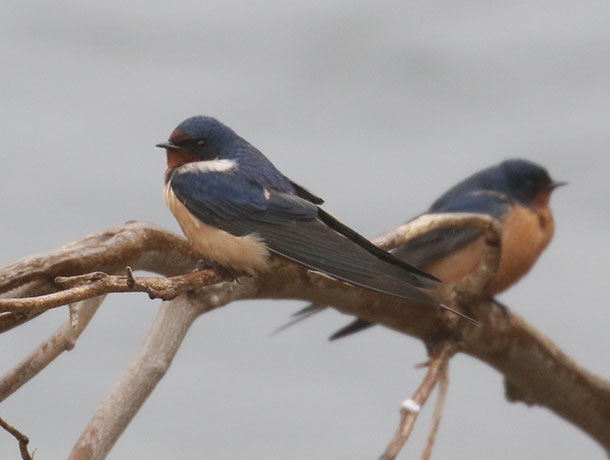
Blue upperside, dark orange throat and forehead
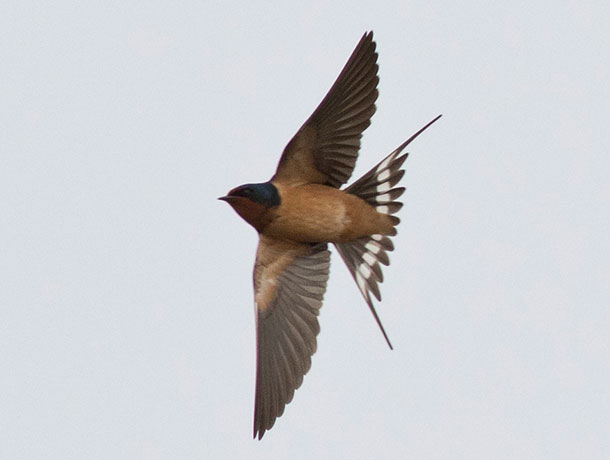
Notice the long forked tail, which is distinctive among the expected swallows
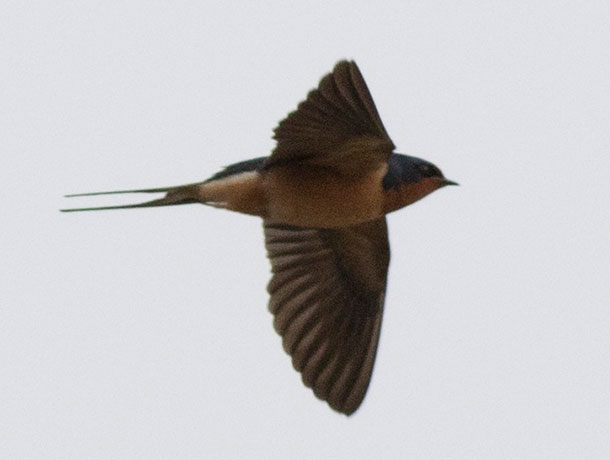
Long tail, dark orange throat
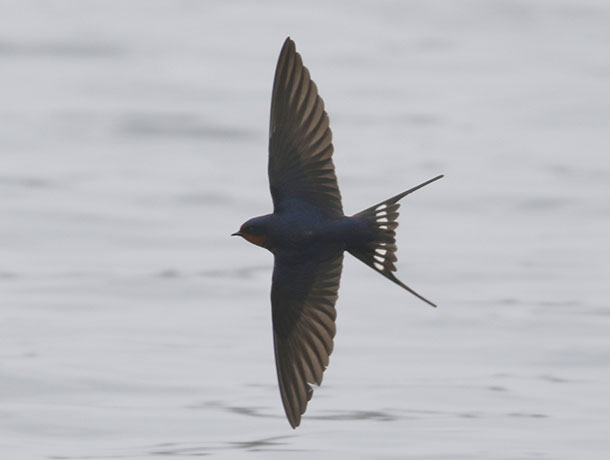
Classic “swallow shape” silhouette
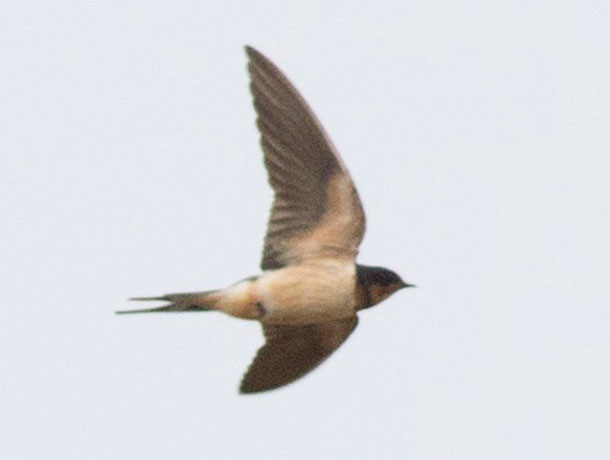
Can be orange or white underneath
Cliff Swallow
Colorful, like Barn Swallow, but with a white forehead, square tail and pale rump
- Dark throat, pale body
- Square tail helps separate from Barn Swallow (caution: young Barn Swallows lack the deeply forked tail of the adults)
- Dark blue upperside with conspicuous pale rump, which separates it from all other expected swallows (see Cave Swallow below)
- Adults in the east have a white forehead
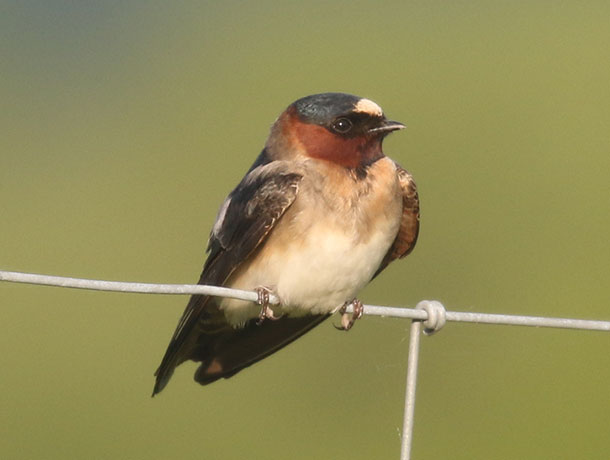
Blue cap, dark orange throat and white forehead
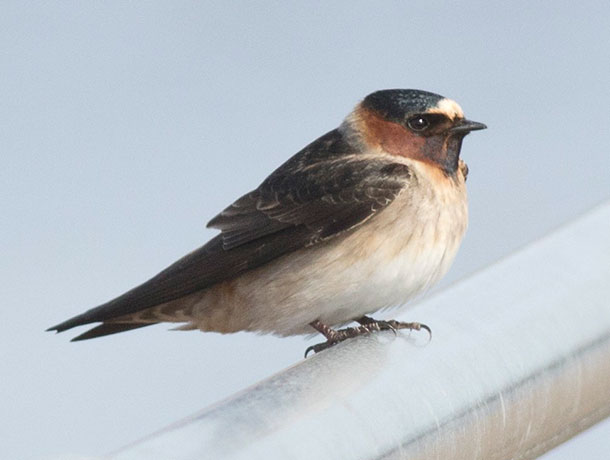
Blue cap, dark orange throat and white forehead
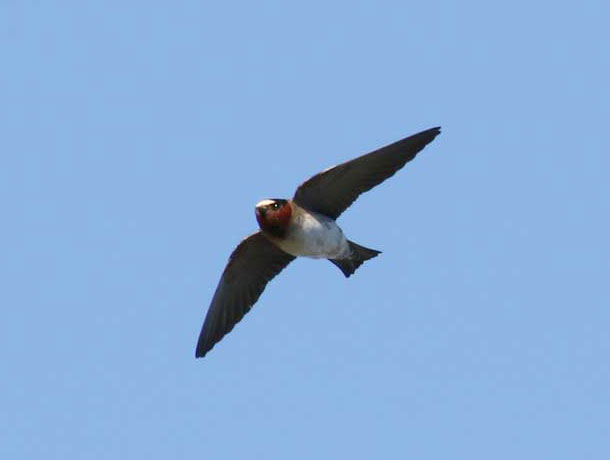
Dark headed overall with a white forehead
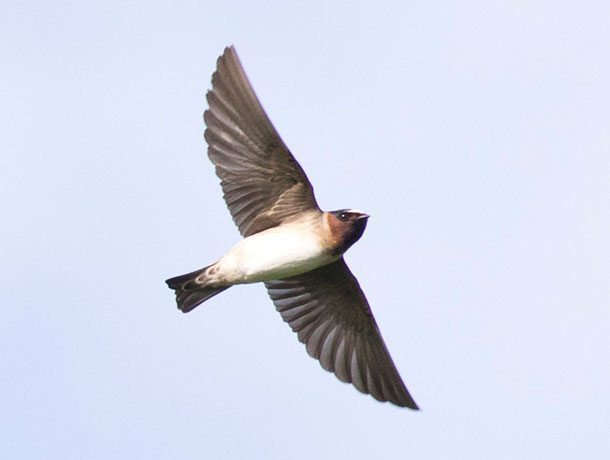
Dark throat and cheeks, square tail and white forehead
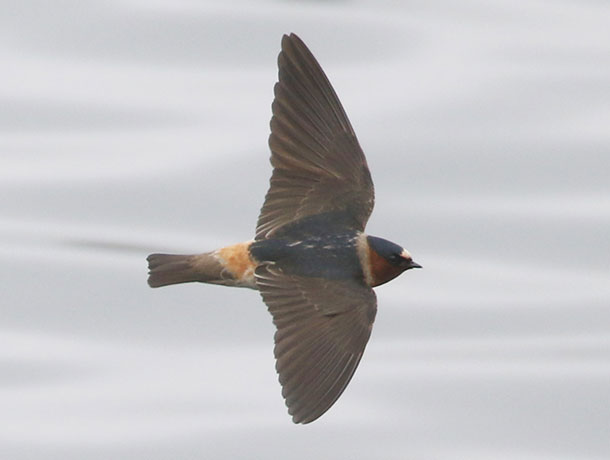
Distinct pale rump is visible even at a distance
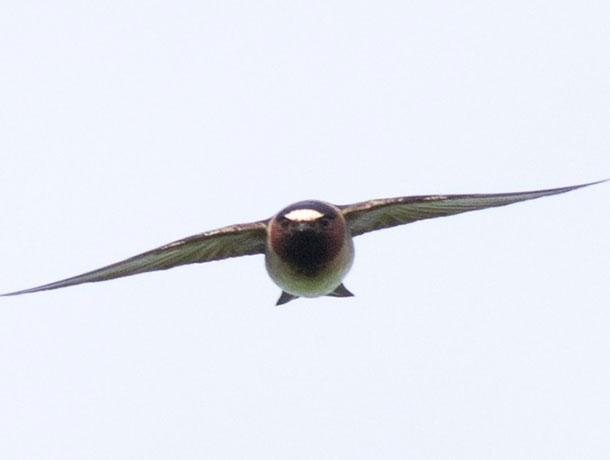
White forehead, dark throat
Purple Martin
Often localized. Typically nest in close proximity to humans, using martin houses or gourds.
- Larger than the rest of the swallows covered here, with a bulkier structure
- Plumage ranges from grayish (young birds and females) to very dark blue (males)
- Tail slightly more forked than the rest of the swallows, except for Barn Swallow
- Be careful not to mistake European Starling for this species
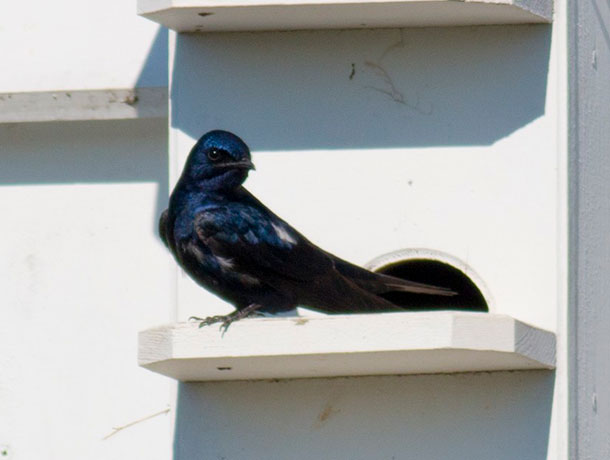
Males are a dark blue color above and below
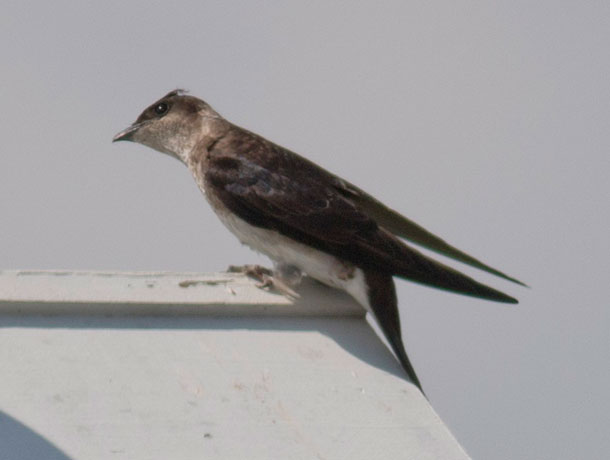
Females and immature birds are more gray on the underside
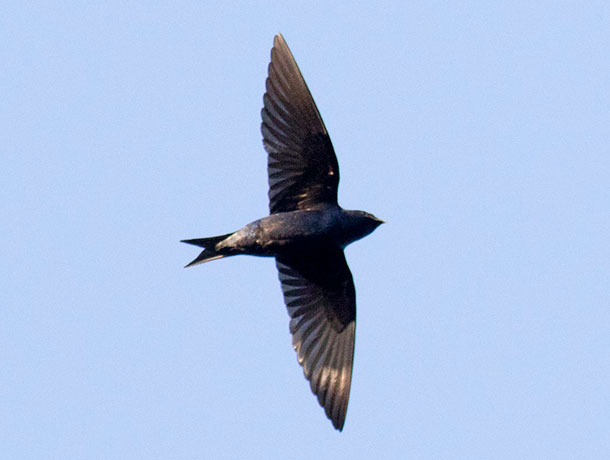
Note more forked tail and dark blue color underneath
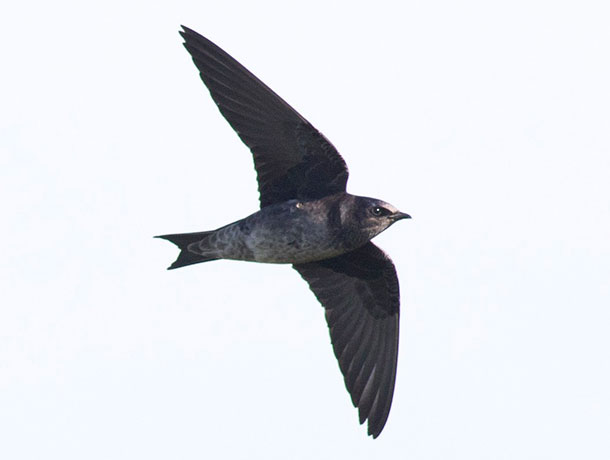
Females and immature birds are more gray on the underside
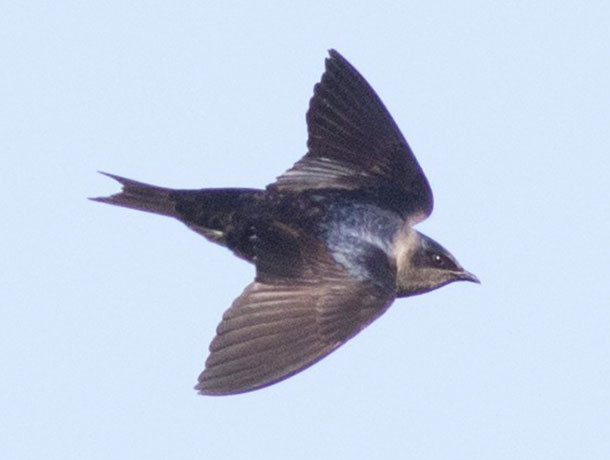
Bulky structure, fairly forked tail, dark blue color
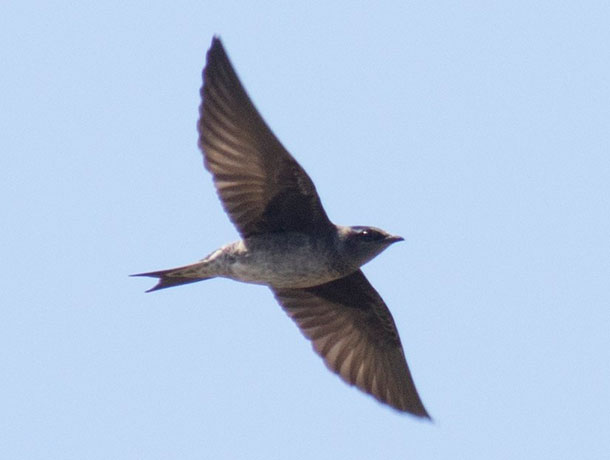
Females and immature birds are more gray on the underside
Other species to be aware of
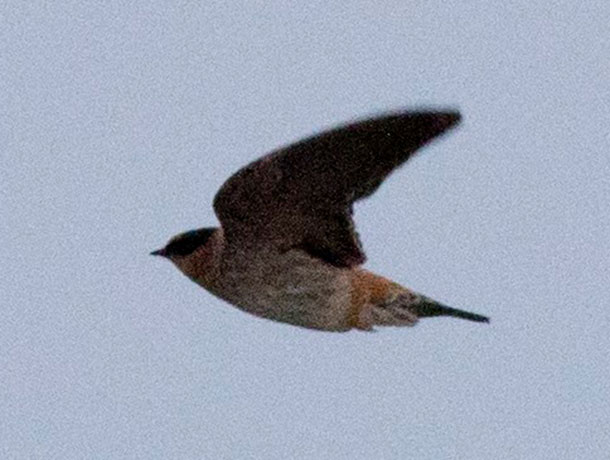
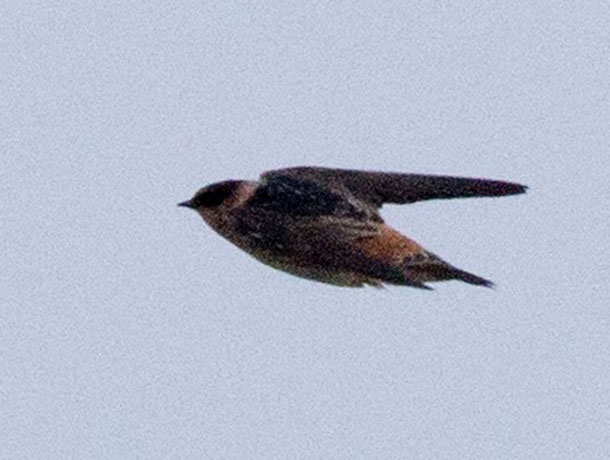
Cave Swallow
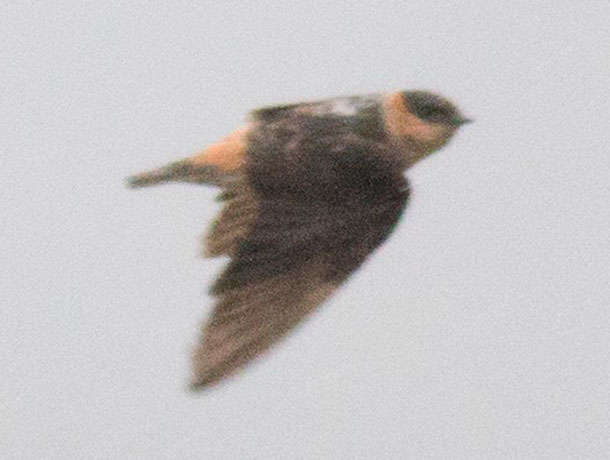
Extremely similar to Cliff Swallow, and also very rare in most eastern locations. If you come across a very late Cliff-like swallow, it is worth considering, but should be identified only with extreme care.
- Pale cheek and throat strongly contrasting with dark cap
- Dark forehead vs white on Cliff (caution: young Cliff Swallows and adults in certain populations can have a dark forehead)
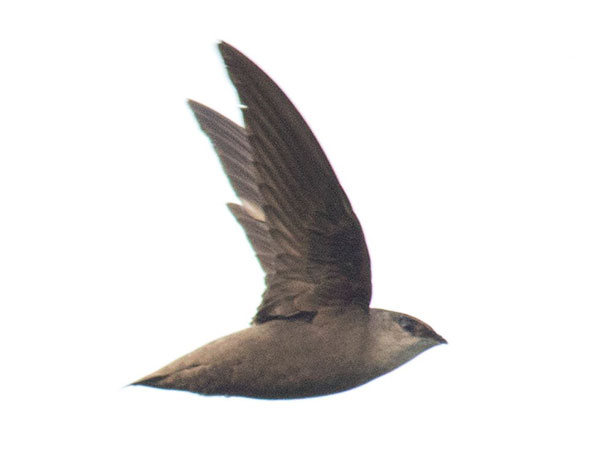
Chimney Swift
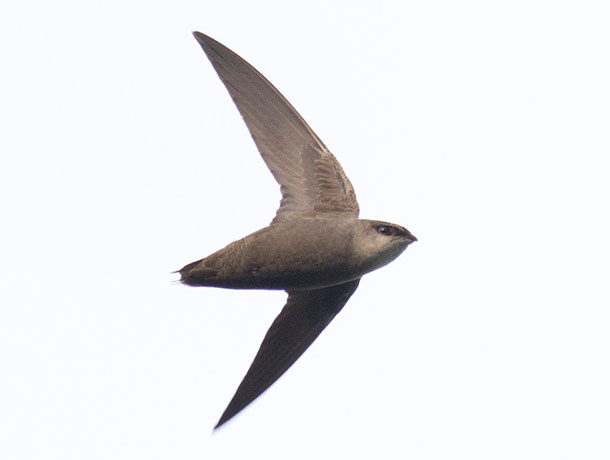
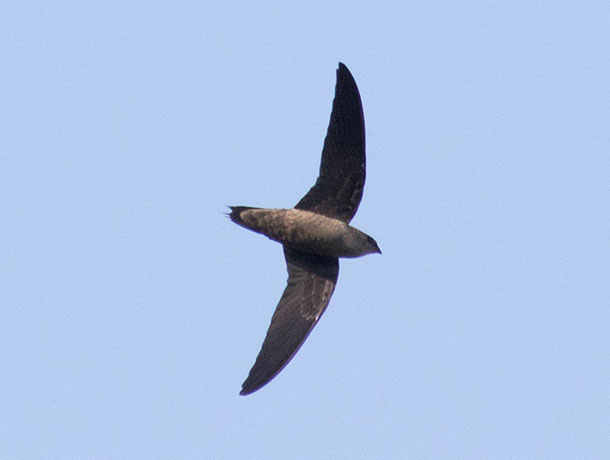
Make sure what you are looking at is actually a swallow! Chimney Swifts sometimes group with swallows, and are also good fliers.
- Mostly gray
- Distinctive "cigar with wings" shape
- Short tail and long wings
Common Nighthawk
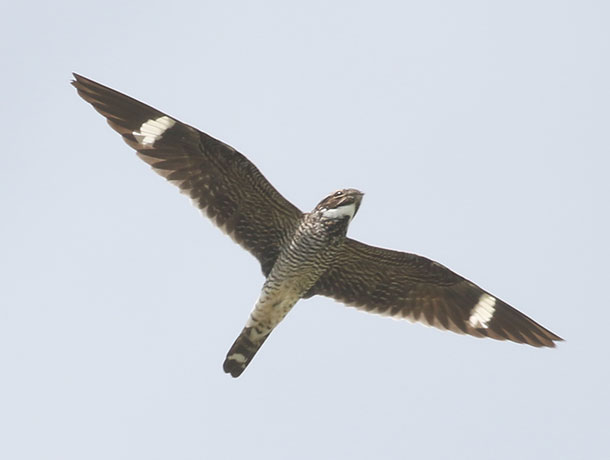
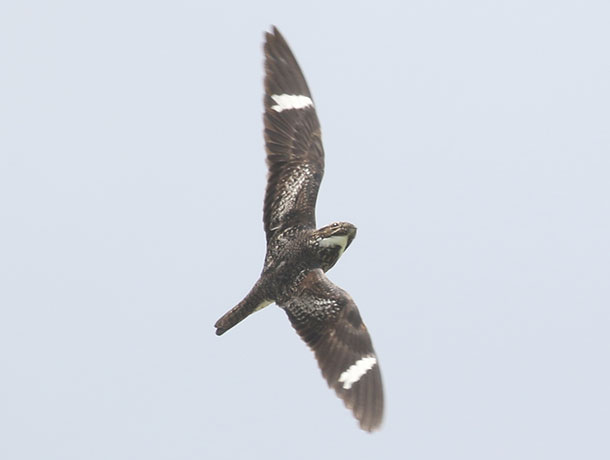
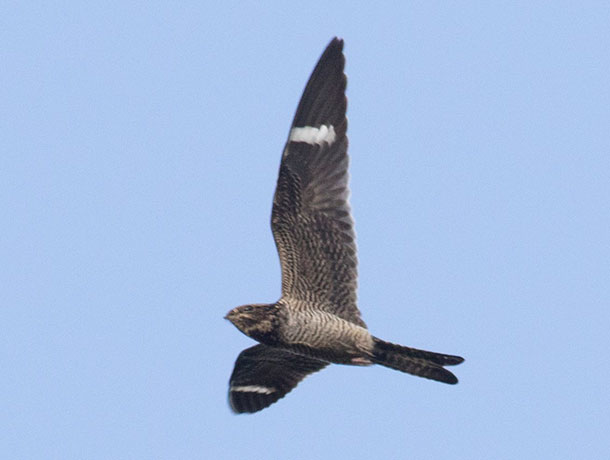
Neither a swallow nor a hawk, this species belongs to the nightjar family. They are larger than swallows, with distinctive white bars in the wings.
Ready to test your swallow ID skills?
All photos © Bobby Brown or David Brown
Like this? Want to help fund more tools and projects on our site?
Support LycoBirds